
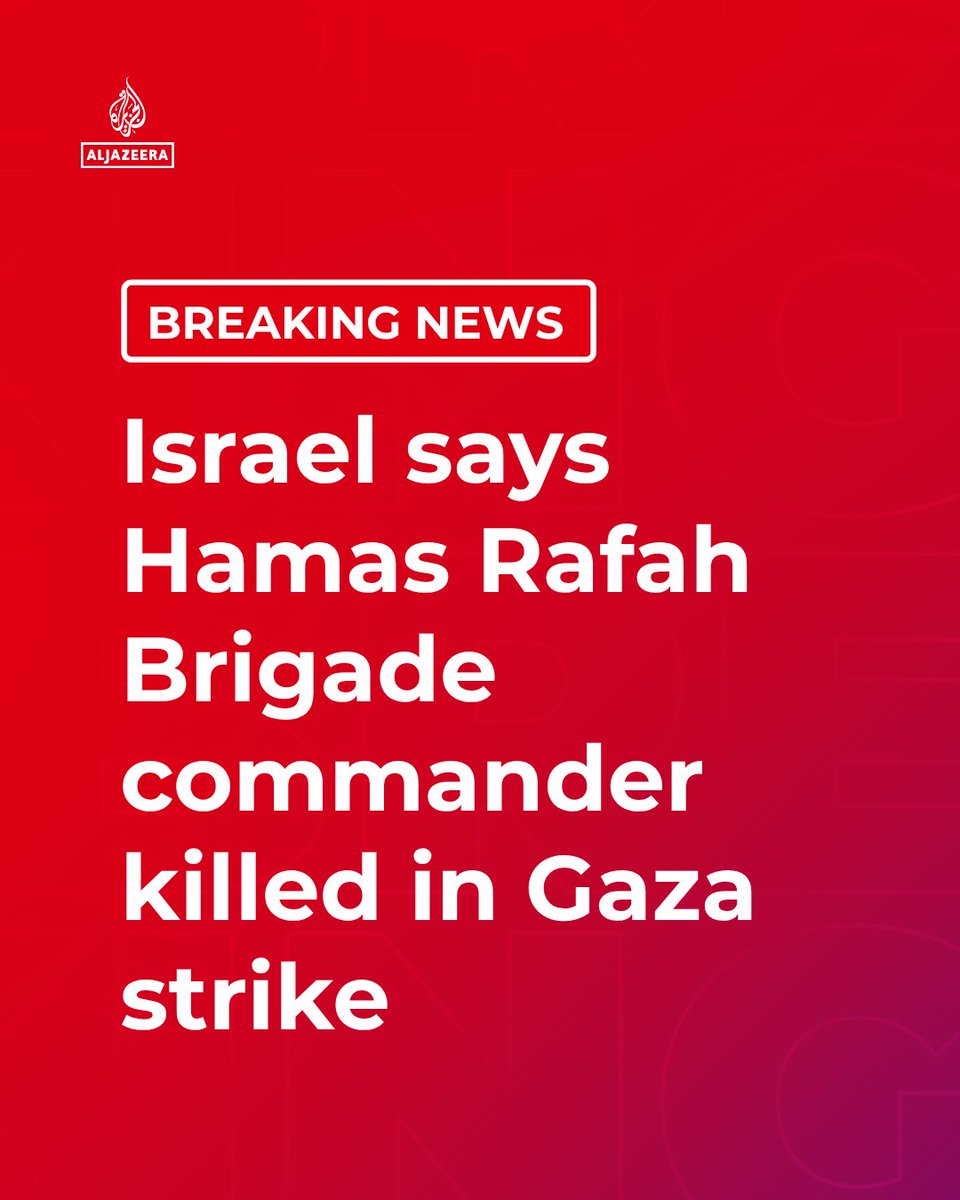
"BREAKING: Israeli Defence Minister Israel Katz says the commander of Hamass Rafah Brigade was killed in an Israeli air attack in southern occupied Gaza. Palestinian media identified him as Nael Abu Obeid, also known as Abu Atiya. More on https://t.co/OwhgaIGyGh https://t.co/Aau8c2Y4Vq"
The ongoing conflict in Gaza has once again escalated with the reported killing of Nael Abu Obeid, the commander of the Hamas Rafah Brigade, in an Israeli airstrike in southern occupied Gaza. This strike marks a significant event in the region, as Abu Obeid was considered a key figure in the military operations of Hamas, a group that has been involved in years of hostilities with Israel. The Israeli Defense Minister, Israel Katz, confirmed the airstrike, leading to renewed international attention on the complex dynamics of the Gaza Strip.
The assassination of Abu Obeid can be interpreted as part of Israel's broader strategy to dismantle the military leadership of Hamas. By targeting key figures, Israel aims to destabilize the operational capacities of the group. However, this approach raises concerns regarding the cycle of violence it perpetuates. The conflict causes significant suffering for civilians on both sides, and the killing of leaders often leads to reprisals and further civilian casualties, complicating efforts toward peace. Recent analyses suggest that a more constructive approach may be necessary to address the root causes of the conflict, focusing on dialogue and reconciliation rather than military actions alone.
The international community continues to react to the escalating violence in Gaza with mixed responses. While some countries have expressed support for Israels right to defend itself, there are also calls for restraint and the protection of civilian lives from humanitarian organizations and various governments. The killing of a prominent figure like Abu Obeid is likely to exacerbate tensions, drawing criticism from those who view it as an act that could impede peace negotiations. The UN and various human rights groups have urged all parties to show restraint and seek resolutions that honor international humanitarian principles, emphasizing the importance of protecting civilians in conflict zones.
As the situation unfolds, stakeholders including regional powers and international organizations must consider approaches that prioritize peace and stability over military confrontations. Efforts to broker dialogue between conflicting parties may yield more positive outcomes. The loss of a significant military leader could provide an opportunity for both sides to reassess their strategies and potentially engage in discussions aimed at reducing hostilities. It is crucial for the global community to advocate for pathways toward lasting peace, considering the devastating humanitarian situation in the region.


No comments yet. Be the first to comment!