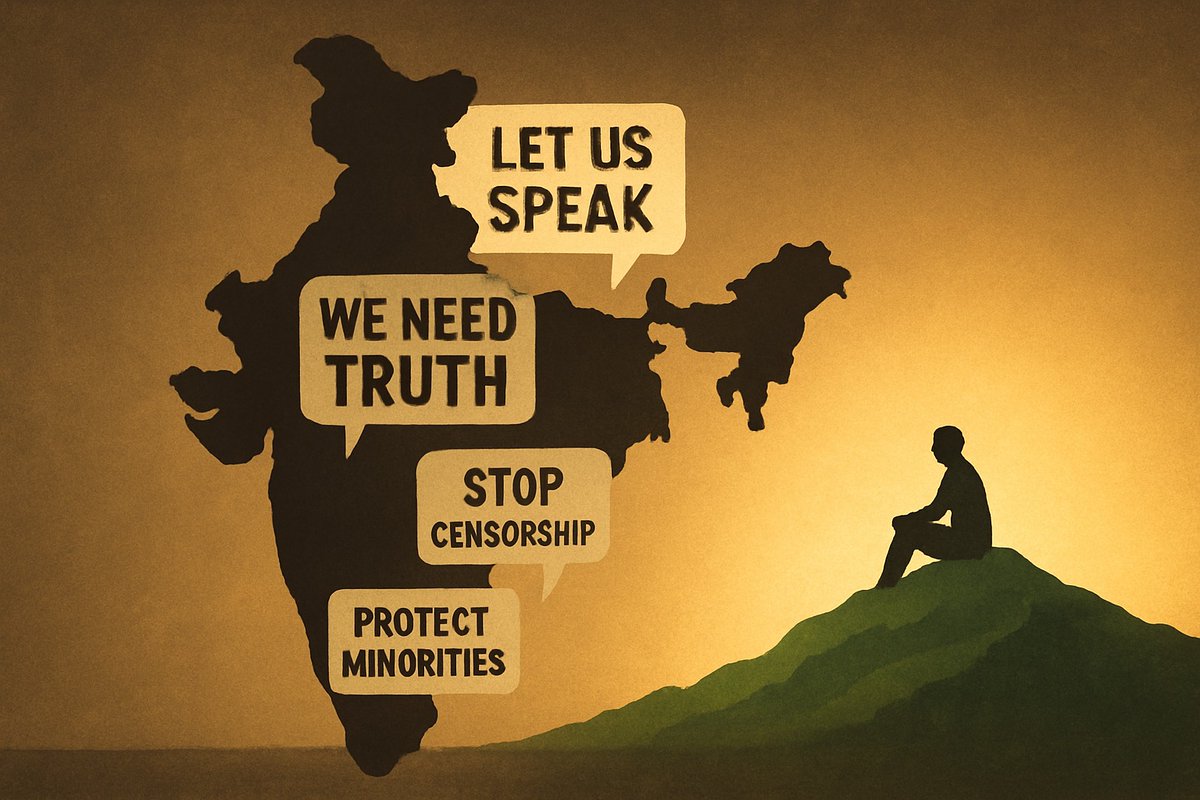
"The Elephant That Fears the Ant: India?s Endless Fixation on Pakistan India?s obsession with Pakistan has crossed from rivalry into psychological dependence. A country that markets itself as a rising superpower simply cannot stop talking about its smaller neighbor, even after getting publicly humiliated in February 2019 and again in May 2025. Yet India continues issuing the same empty threats of ?teaching Pakistan a lesson.? The louder the threats become, the clearer the insecurity behind them. What India presents as power is nothing more than bruised ego wrapped in nationalism. The truth India struggles with is this: its aura of military superiority collapsed years ago. In 2019, Pakistan shot down two Indian jets, a Su30MKI and a MiG21, and captured Wing Commander Abhinandan as a POW. That alone shattered the myth of Indian air dominance. But the confrontation of 2025 hit even harder. Independent observers and Pakistani sources reported up to seven more Indian aircraft destroyed, including four Rafales, one Su30MKI, one MiG29, and one Mirage 2000. Speculation about another Indian pilot being taken POW circulated widely. And here lies the part that burns India the most: Pakistan did not claim the captured pilot publicly. Not because it lacked proof, but because Pakistan chose to give India face-saving space and avoid a deeper humiliation. India knows this. Pakistan knows this. Analysts know this. Being spared out of courtesy hurts even more. What truly shattered India?s military narrative was the destruction of the so-called impenetrable S400 Cheeseboard radar, a system India constantly promoted as unbeatable. When Pakistan struck multiple Indian military sites and took out a component of the S400 itself, the myth of India?s secured airspace collapsed instantly. It forced India into denial, censorship, and propaganda instead of confronting reality. The deeper problem is that India has lost the hegemony it once believed it had. South Asia no longer follows its lead. Nepal openly defies it. Sri Lanka partners more with China. Bangladesh no longer walks in India?s shadow. Pakistan blocks India?s strategic designs and outmaneuvers it militarily where it matters most. India cannot dictate the region anymore. The region dictates India. Nothing frustrates a self-proclaimed big brother more than realizing no one treats him like one. That frustration turns into obsession. Internationally, India?s manufactured image is falling apart. The world sees rising intolerance, shrinking freedoms, and embarrassing military missteps. The United States has not spared its criticism. President Donald Trump repeatedly called out India in public speeches and highlighting trade imbalances. The U.S. administration slapped hefty tariffs on Indian goods, signaling that New Delhi?s self-proclaimed rise as a superpower was met with skepticism in Washington. Trump famously referred to India?s trade behavior as ?taking advantage of the U.S. while pointing fingers at others,? making it clear that India?s domestic bravado could not hide its international vulnerabilities. Instead of facing these cracks, India has gone into full censorship mode. After the recent confrontations, India blocked impartial YouTube channels, websites, and suspended X accounts that questioned the official narrative. Voices that actually make sense, like Pravin Sawhney, a respected analyst and former military officer, are silenced simply because they refuse to repeat government propaganda. When a state is scared of its own thinkers, it is not confidence. It is panic. At the core, India suffers from strategic arrogance. It still believes size alone guarantees victory and that being the elephant in the region means it can stomp its way to success. What it fails to understand is that competence, discipline, and realistic assessment win wars, not weight. Pakistan has proven repeatedly that underestimating an opponent can deliver painful lessons. Yet India refuses to learn. It keeps repeating the same mistakes, trying the same failed approach, and hiding behind the same loud rhetoric every time reality hits hard. India?s obsession with Pakistan is not about strength. It is the behavior of a shaken state dealing with insecurity, declining influence, and a bruised ego. When a country loses regional leverage, suffers international embarrassment, censors its own people, and still cannot fix its strategic failures, it naturally lashes out at the one opponent it cannot dominate. That is why New Delhi keeps talking about teaching lessons. Because deep down, India knows exactly who keeps giving the lessons, who keeps refusing to learn, and who publicly calls out its failures: the world, and especially the United States"
Context and Analysis
Confirmed sources have released a significant statement addressing current developments. This announcement provides clarity on matters of national importance and reflects the government's commitment to transparency and public engagement.
This development comes as part of ongoing efforts to keep the public informed about important policy decisions and national security matters. The statement has been welcomed by political analysts and the general public alike.
Key Points
The announcement emphasizes several important aspects of national policy and strategic direction. Experts suggest this will have positive implications for regional stability and international relations.
Reactions and Response
Political commentators have noted the significance of this announcement, highlighting its potential impact on various sectors. The clarity and directness of the message have been particularly appreciated.
Looking Forward
Further details and implementation strategies are expected to be announced in the coming days. This represents an important step in the nation's continued progress and development.